Introduction:
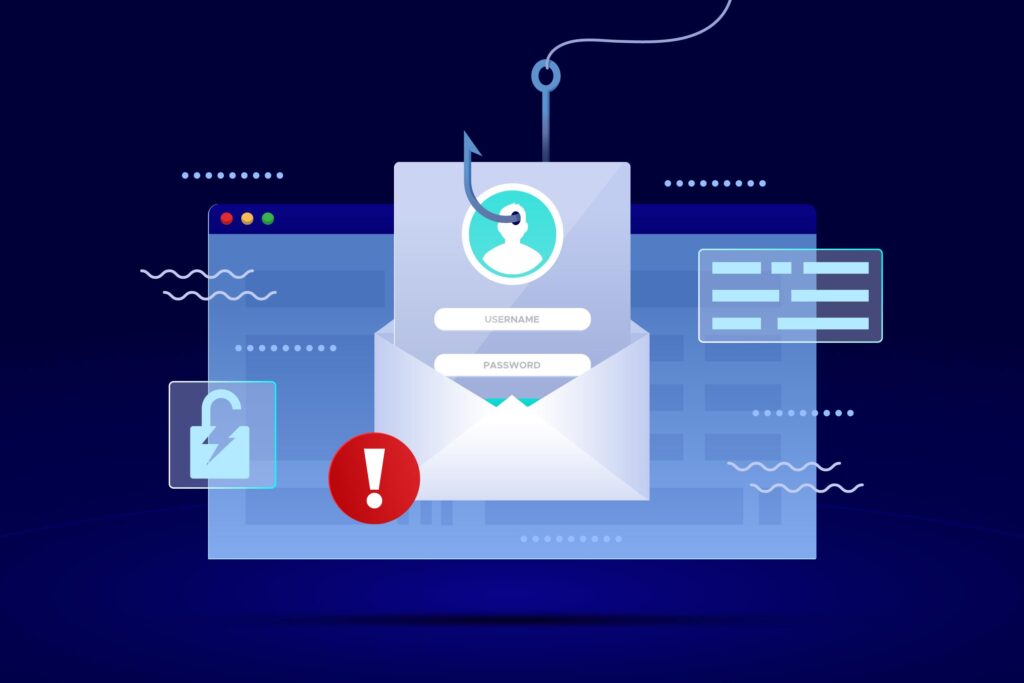
In today’s digital landscape, organizations face an ever-growing number of cyber threats, with phishing attacks being one of the most prevalent and effective methods used by hackers. Almost every attack on an organization starts with successful phishing mail. After such initial attack, other hacking techniques follow, such as dropping malicious payload, connecting with malicious Command & Control center and lateral movements, privileges escalation and finally attack on seizing of organizations’ “crown jewels”.
Therefore, here, we are going to shed light on the significance of phishing simulation exercises. These simulations are powerful tools that help you educate your employees and strengthen their defense against phishing attacks.
As we already know, phishing simulations are segments of overall cybersecurity awareness programs that allow organizations to send realistic phishing emails to their employees. This enables them to gauge their awareness and response to such attacks. By replicating real-world scenarios, these simulations provide invaluable insights into an organization’s vulnerability to phishing threats.
Phishing scenarios and examples you could use when building your phishing simulation campaign
1. The fake CRM lead – “You have been assigned as a lead owner of John Smith”
Purpose: Credentials stealing. Psychological driver: personal gain.
Your colleagues thought they had a new lead assigned. But if they “bait”, they will give their CRM credentials to hackers. The lure of personal gain is the lever of many phishing campaigns with a broad range of enticements: gift cards, free smartphones, etc..
2. Your password has expired – email from fake authentication service like Okta or LastPAss
Purpose: Credentials stealing. Psychological driver: security
You can trick your users with simulating a security message. All unexpected password update requirements we receive open up a gate for a breach for phishing attacks.
3. Granting permissions – “Windows permissions requested to view a document”
Purpose: Consent phishing.
One-click authentication is a great convenience, but for hackers. They are skilled at turning users’ habits against them (ie. regularly granting permissions in order to access apps, documents, etc.). This type of attack is all the more difficult to detect that the consent page through which hackers get permissions for their app is the real Microsoft Office.
4. Fake security update – “Update your password immediately to continue using our services”
Purpose: Drive-by-download. Psychological driver: security.
Updating your browser, your anti spam software, your mac OS. Yes, these are good habits and good practice. Downloading malware after a phishing attack is – not so great.
5. This mysterious document – “Here is the document shared with you. Please enter your password to gain access”
Purpose: Attachment with malware. Psychological driver: Curiosity.
This one is simple and effective. Few are those who can resist the lure of opening or accessing documents that are sent to them by a “trusted” source.
6. The CEO email – “from: DocumSign – your CEO attached the document for you to review and sign with your password”
Purpose: Dropping malware. Psychological driver: social proof and hierarchy.
This one can never be ignored, and no one is indifferent to their CEO. That’s why, after a cursory assessment, an employee might open an email, and fall into the trap.
7. “Sheer Panic – “Deletion request processing – if you want to keep this documents, authorize with your company password”
Purpose: Credentials stealing. Psychological driver: Fear.
Let’s imagine the project you’ve been working on for months, and you don’t want to see the files disappear in the fog of cloud-based storage. For everything to be back to normal, all you have to do is give your credentials to the hackers.
These are just some of the tactics that you can use to train your employees. It should be stressed that this exercise should only be conducted in a professional work environment and with approval from your superiors.
What are the benefits of phishing simulation?
1. Increased Awareness: Simulations play a pivotal role in educating about the tactics employed by cybercriminals. They create a sense of urgency and empower employees to recognize, avoid, and report potential threats effectively. Through these simulations, employees become the first line of defense against phishing attacks.
2. Risk Identification: Simulations assist in identifying high-risk employees or departments that may require additional training or security measures. By analyzing the results collected from simulations, you can identify employees that need more training and request them to attend one, so as to improve their cybersecurity readiness.
3. Training and Education: By using the results of analysis of phishing campaigns then you can discover what knowledge is lacking in which departments so as to better craft future training sessions for them. In fact, to design targeted training programs in which employees can learn how to identify red flags, verify requests, and take appropriate action. This strengthens their ability to protect sensitive information and reinforces a culture of cybersecurity.
4. Proactive Incident Response: By regularly conducting phishing simulations, at least quarterly, organizations can evaluate incident response practices of their employees – are they reacting as trained and in a timely fashion. This includes examining how quickly employees report suspicious emails, how effectively IT teams respond, and the overall effectiveness of incident handling processes. It allows organizations to fine-tune their response mechanisms, minimizing potential damage in the event of a real phishing attack.
5. Continuous Improvement: Such a program provides you with an ongoing assessment of the entire security posture of the human factor. You can identify areas of weakness, implement necessary improvements, and measure progress over time.
Another benefit is that employees must stay alert all the time since they will never know when a new phish mail arrives in their inboxes, whether real phishing threat or a simulation.
Conclusion
By raising employee awareness, identifying risks, providing targeted training, and improving incident response capabilities, these simulations equip your organization to mitigate the risks posed by phishing attacks.
As a cybersecurity expert, you should strive for the integration of phishing simulations into a comprehensive security awareness program. Let us work together to strengthen our defenses and safeguard critical business data from the ever-present threat of phishing attacks.
By attending our conference you will learn more details on how to design your awareness program and which phishing simulation tool fits best for your needs.